Author Archives: Natalie Bennett

Carnival of Feminists – what a fortnight!

The Carnival of Feminists No 32 is now up on Bumblebee Sweet Potato, and what a period she had to cover, with the huge American row over two feminist bloggers, Amanda from Pandagon & Melissa from Shakespeare’s Sister. If you haven’t heard at least a snatch of that, you must have been suffering a long internet outage… but catch up with the latest and best commentary in the carnival.

But roll up, roll up, if that doesn’t appeal, there’s a lot, lot more… about a forced renaming of the Vagina Monologues (I mean, hello!), reproductive rights, and much more.

Don’t waste time over here – do go over and check it out ….

But ah, before you do, I will not that I am looking for future hosts, so if you’ve been thinking about it, now would be a great time to speak up.

Avignon: Petite Palace and Calvet Museum

One day in Avignon and a feast of art…
petitepalace

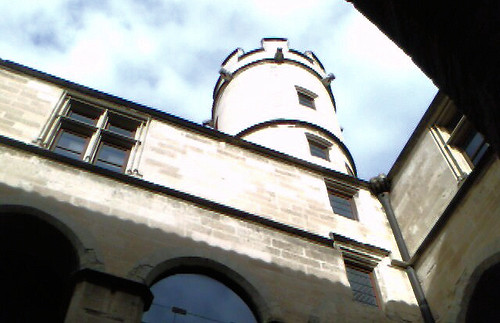
First up is the Petite Palace, which faces down on to the square in front of the Palais de Papes, and is a very model of Renassaince lightness and balance after its weight.

What it houses, however, is what has to be described as a rather specialist collection of pre-Renaissance (mostly religious) art. There are really only so many broadly Byzantine-style Madonnas with gold backgrounds you can look at before you start to glaze over. (It was not entirely surprising that staff outnumbered visitors about three-one.)

The room I found by far the most interesting was the first, which out of keeping with the rest houses a disparate collection from roughly the Palais period.

It is a time of tremendously disparate influences. You go from the “Le signe des gemeaux” from near nimes, very much degraded classical marble carvings to grotesque column heads that are very “medieval”.

But the highlight is definitely the frescos from the Maison de Sorgues at Vaucluse, with naïve but delightfully lively hunting scenes and court scene. In one a greyhound-type hunting dog is straining at the leash; while another much heavier hound-type is obviously exhausted, its tongue hanging limply. There’s artistic talent there, but the trees have individual leaves on neatly spaced, splayed branches as children draw them and there is no sense of perspective.

The colours must have been spectacular; the once green hose of a page give a hint of this. But they have been faded and much-greyed by time.

Generally faces are sketched in, but again the artistry shines through in two lovers in a corner of one forest scene. They are surely about to kiss, but another young man is listening in from behind a termite mound.

Then, continuing the artistic feast, on to the Musee Calvet, which is Avignon’s primary art museum.

To start at the beginning; the prehistory section, which is recently remodelled and moodily lit (not quite to my taste), but a very fine collection, beginning with the stone stelae of which much is made of the Stele du Rocher des Doms, found at the centre of town, “proving” its ancient roots.

The commentary says these (although only 30-50cm in height) were part of the megalithic phenomenon and reflected changes in Neolithic society after about 3,500BC, when social hierarchies increasingly developed. They had three periods – an early one of just simple stones, then stones marked with chevrons and recesses. Finally you get those with stylised human faces, dating from about 2,800-2,400BC.

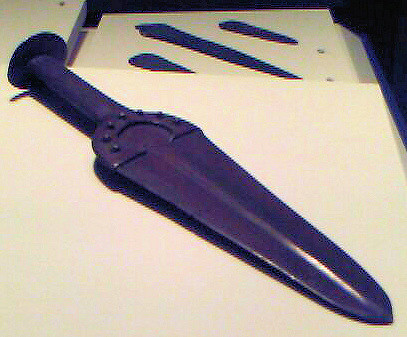
Then you get into the bronze age, where the collection really shines, as with this spectacular dagger.
dagger

There’s also a brilliant collection of bronze age axes that are really works of art in their own right.
read more »

Do not read if you are hungry

A considerably better than usual newspaper history of the pancake. (I.e. not just done from last year’s clippings.)

So enjoy, from the 1750s…

…in upper-class dining rooms, a new culinary invention began to drive diners wild: known as ”quire of paper”, this new pancake was made with a cream-rich batter, cooked as vast and whisper-thin as possible on charcoal-fired stoves. Traditionally, it was served with sugar, butter and a scrape of nutmeg and with bowls of thickened creams redolent with the volatile oils of lemons and oranges.

The warmest-recorded January

The world: 1.9C hotter than an average January.

Then this was in my inbox this morning – attributed to Gavin Schmidt, an atmospheric scientist who works in James Hansen’s team at NASA GISS….

…radiative forcing which the planet is experiencing just now is roughly the same as the current CO2 levels, but only because of the massive cooling effect from sulphour aerosols (which are very short-lived, and which we can expect to decline dramatically if we move to a low-carbon economy). The full radiative forcing from all the greenhouse gases is around 460 ppm CO2e now, but if you add forcings from black soot and ozone, it’s around 560 ppm CO2e.

A focus on ‘working’ women

Over on My London Your London I’ve a review of the Union Theatre’s fine production of Stars in the Morning Sky, a translation of Alexander Galin’s account of a group of prostitutes forced out of Moscow in 1980 in the pre-Olympics “clean-up”. It is the first in a series of productions with female directors as part of the theatre’s anniversary celebrations – that this requires still special arrangements is, well, depressing…

Visiting the plague wall (Provence)

I just put a very muddy pair of jeans into the washing machine. This explains how they got that way…

I am writing this in a guardpost on the mur de le pest. Part of a ring of fortifications built to keep the plague out of the bulk of France in the 18th century, after it broke out in Marseilles. The guardroom is still totally watertight; it’s 2m thick at the base, the walls really rock solid but without cement – only plaster on the inside to block the wind.

That’s handy, since it is raining quite heavily outside. But even the ancient chimney, just a hole in the corner of the roof now since it has lost its hood, is letting in barely a drop, so well designed is it, and though it looks like it still draws, since the local youths obviously use this as a den, and the old fireplace as a cooker.

The walls rise straight to about six foot then it looks like there was a second story of wood and a door to directly access that from the ‘clean’ side of the wall. The floor level entrance door may have opened out into a vestibule area after the first wall gate, reached by a mere goat track from the plague side. There’s a ruined building on the other side, perhaps half the size of this.

At the floor level the walls start to curve inward, at first gently, then more rapidly and large flat stones about 4ocm wide and of varying lengths fill the gap. The builders made life easy on one side by using the natural rock – although chipped into neat straight lines, to reach almost to the first floor.

I suppose these are all national monuments now, but you could make quite a nice little holiday home out of this living: quarters on the ground floor, sleeping upstairs – fine for all but the depths of winter.

How I got here – well there lies a tale … it is what I think of my “mad dogs and Englishwomen” day of my holiday – usually have one, where I have mad plans that I make happen somehow or another.

So having read a guide to the region around Avignon I decided that I’d like to visit the plague wall, built in 1720. The guide suggested started out from Langes. So I got to the tourist office to ask about buses. Much head-scratching ensues. Only one bus a day goes to and from Langes, and the “to” has already gone. I finally get them to hand me the timetable; and work out for myself a route.
read more »