Author Archives: Natalie Bennett

Mary Beard’s always worth reading…

A shorter version was originally published on Blogcritics

Mary Beard is pretty well public intellectual of the year, after her spirited performance on Question Time, and strong-minded reaction to the flood of misogynist vitriol she received as a result. I was really looking forward to her new Confronting the Classics, but I was a little disappointed on opening it to find a little-edited collection of book reviews.

As I got into the book, however, on a long train journey from Madrid to London – appropriately a swoop through a large expanse of the Roman Empire – my disappointment vanished. Sure the loose thesis that ties it all together – really we can know little of the actual lives of the Ancients, and often what we say has more to do with our “life and times” than their’s – is hardly earth-shattering.

But the ascetic wit and brutal honesty we expect from Beard shines through (she’s an entirely fair reviewer, but doesn’t pull punches or suffer foolish theses gladly) – commenting on Vanessa Collingridge’s Boudica, she notes that the fiction writer of a series about the leader, Manda Scott “comes over as something of a nutter: ‘she now practices and teaches shamanic dreaming and spirituality’ and ‘she firmly believes her subject was given to her by the spirits’ … After this warning… The third volume of her series, comes as a relief (or at least the spirits we sensible enough to finger someone who could write”. (P. 156)

And Beard provide some fascinating details that we do know of ancient lives, and some great anecdotes that we don’t but are worth reading anyway,some supplied by the reviewees, some by Beard herself.
read more »

Kentish pleasures

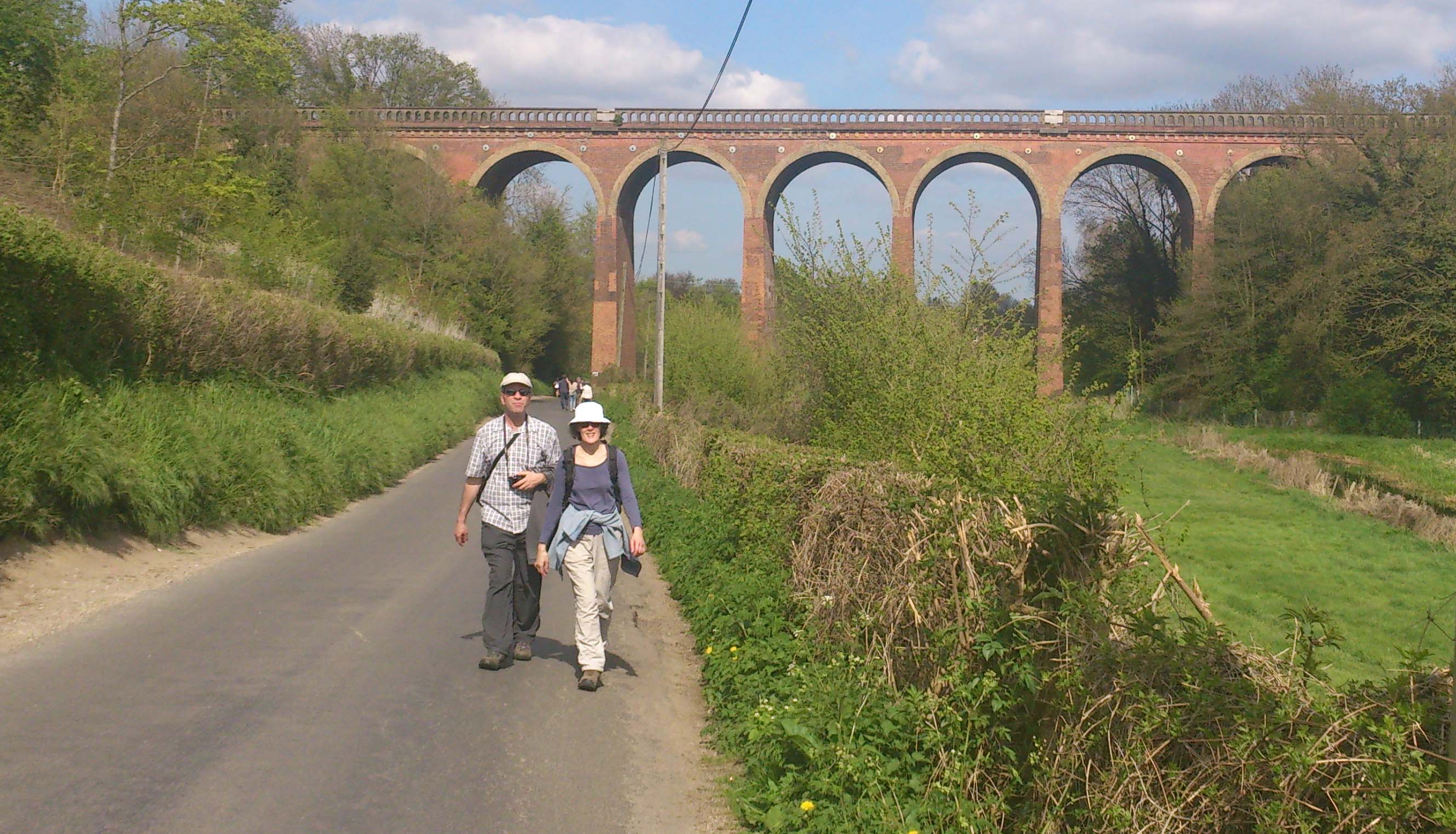
After elections, an afternoon off – a very pleasant stroll in Kent from Eynsford to Shoreham – yes the weather helped…

I was following a 1998 guide to walks around London, but luckily the paths were still there and open – and surprisingly accurate.

Eynsford has a well-known ford beside its little humpbacked bridge at the start of the walk; packed on this sunny day with paddling children. Around the bend there were still the Highland cattle billed as on show in 1998, together with some Indian runner ducks in the river.

Then you come to this simple, elegant railway bridge …

bridge_edited-1
read more »

Those rebellious English …

From A Commonwealth of the People: Popular Politics and England’s Long Social Revolution, 1066-1649 by David Rollison

“The institutionalisation, in the 14th century, of Sir Thomas Smith’s first and second ‘sorts of men’, the peers and the knights, was a factor in raising the question of what to call the rest. Knights and gentlemen sat at Westminster with the Commons, not the Lords, but were acknowledged members of the ruling. Class. … the rise of the House of Commons had, by 1376, expanded and formalised the ranks of citizens to encompass the burgesses of every English borough. Urban citizens were joined, from 1381 to 1450, by a more formal concept of the legendary yeoman. This rural equivalent of the urban citizen was not at first seen primarily in terms of his role as a freeholding voter in the shire and borough juries or parliamentary elections. Fifteenth-century writers were more likely to see him in military terms.” p. 242

“The economic basis of his status – freehold land and/or capital in the form of farming skills and equipment, was not yet prominent, as it would be in the more economically minded 16th to 18th centuries. … Conceived as a hands-on member of the second estate, shaping, ordering and organising the lower part or ‘4th sort’. When 16th-century writers …observed that yeomen and citizens had betrayed their prescribed constitutional role, they meant yeomen were no longer unquestioningly loyal and deferential.” p.243

“The collective nature of the rebellion of 1381′ which involved many communities in communicayon with each other, acting under common banners and slogans, expressed in a common tongue, may be the point at which, in the common mind, commun(it as), which customarily designated a specific, local community, began to be extended, in concept and word, to the common weal, designating (if only tacitly) the entire national community under the authority of a single ruler.” p264

“The spectre of popular rebellion haunted every generation from 1381 to 1649. Like parliamentarians in 1376 and the rebels of 1381 and 1450, the leader of a rising in 1469 ‘denounced the ‘covetous rule’ of ‘sedicious persones’ and called for ‘reformacioun’. The stated object of the [1469] rebellion, writes Wood , ‘was to protect the ‘comonwele of this lond’ against the ‘singular loucour’ of its rulers. Tax, evil advisers and the duty of the ‘trewe commons’ to rise for the commonweal were, by now, familiar themes.” p278

“Between the 14th and the 16th centuries, the cloth industry gradually … Leaked away from the medieval urban centres like Salisbury, Gloucester and Bristol and reproduced itself … Around a large number of market towns in many parts of England. … They we linked, practically, by trafike, [trade] … Thus emerged England’s first national industry… By the mid-15th century it was becoming clear that whole commodity production moved around it was a permanent feature of the English landscape. .. A Trade Policy, a lybel distributed among parliamentarians in 1463, but written earlier, possibly by John Lydgate…. gives us a systematic account of the ideas that influenced that parliament when it introduced legislation regulating cloth making and introducing basic protections for wage workers … claims to be the earliest document of English economic history. It’s topic, explicitly, was ‘the welth of ynglond’.” p.316

Sir John Fortescue in 16th century saw as crucial for Egland’s well being “that the commune people of thys londde are the best fedde, and also the best cledde of any natyon chrysten or hethen.” Some had argued that the commons would be less rebellious if they be poor, he said, as they would rebel less. But in contrast to France, where the power of the nobility was not strongly balanced by a vigorous, independent commonality, the king was too frightened to tax his nobles for fear of rebellion. p. 340
The Levellers and the Agreements of the People

In a minorly curious coincidence, this week’s Radio Four’s In Our Time was on the Putney debates, just as I finished reading The Agreements of the People, the Levellers and the Constitutional Crisis of the English Revolution, by Philip Baker and Elliot Vernon eds.

It’s a highly academic collection of essays, but some of them I found fascinating even as a lay reader…
In D. Alan Orr’s chapter
p. 76 “the tumultuous events that overtook England and its neighbouring kingdoms of Scotland and Ireland during the 17th century saw the first significant attempts to produce a written constitution in the English- speaking world. Unsurprisingly, the position of the Agreements of the People in the development of modern constitutionalism is problematic. Their very written-ness has suggested them as important precursors to the US constitution and the emergence of modern constitutionalism, a development that historians of political thought have traditionally situated at the close of the 18th century; however, these curious documents were the product of a different culture in which memory, custom and the spoken word were as important to the process as the printed and written word.”

There were a number of versions of the Agreements … Says “the key to the success of the Levellers’ Agreements was political accountability, and they had a much more developed sense than most of their fellow radicals that this required not merely elections and the rotation of officers, both at a national level and a local level, nor even merely political and financial accountability. It also required active popular participation.” (p61, Jason Peacey’s chapter)

A little glimpse into Bronze and Iron Age mindsets

A shorter version was first published on Blogcritics

One of the fascinations of history is trying to understand the mind of people who lived long ago, and how the societies they lived in were organised. That’s particularly true of prehistory, when we have no written texts to guide us – just physical objects.

In How Ancient Europeans Saw the World: Visions, Patterns and the Shaping of the Mind in Prehistoric Times, Peter S. Wells uses one of the most original approaches I have come across in trying to understand the minds of Bronze and Iron Age Europe by thinking about the shape of their world.

I came away from it thinking that an awful lot of archaeological theory ignores the fact that the world these objects were used in is very different from our own. For example, Wells stresses how different objects look by lamplight or candlelight compared to under electric light, as we usually see them in the museum. If we’re going to understand how they were used, how they were understood, the social context, you’ve pretty well got to look at them in the same way.

It’s also fascinating to think how few human-made objects Bronze Age people in particularly would generally have come across – and how they would have stood out against the natural environment. One spectacular object would probably have lingered in the mind, been talked about for decades – whereas we’re bombarded with human-made images every second. And before writing, interpretting objects – perhaps an object that arrived from abroad, with little “story” attached to it would have relied on detailed interpretation of the object itself – much as an archaeologist has to do today.

Or think about landscape. Wells says Bronze Age people (probably 98 per cent plus of them) were involved in ploughing, digging, cultivating, harvesting, threshing, making fences, and constructing buildings… They perceived a physical world with a directness and an intensity that most of us can only try to imagine. .. he or she would have seen the features of the landscape – the fields, trees, fixes, and hedges – as a product of intensive labour, direct bodily engagement, and also as a potential source of the raw materials for sustenance and trade.” (p. 38)

He uses the concept of “ecological psychology” – the idea that an individual’s perception is directly dependent upon the environment in which the perception occurs. “We see things by interacting with them – touching them, handling them, carrying them, using them. The same principle that applies to our perception of landscapes … Somethings to act in – to walk-through, to collect wood in, to harvest cereals in.” (p. 23)
read more »

Matchwomen – founders of New Unionism…

First published on Blogcritics

Even if you have never studied history, you probably have some vague awareness of the Matchgirls’ Strike of 1888 in London – and think of poor waifs, frail girls and young women, victims of vile Victorian exploitation. If you have studied history, you were probably taught that the strike was led by middle-class Fabian, Annie Besant, who provided the leadership that the uneducated East End women simply could not have found from their own ranks.

In either case, what you should do is read Louise Raw’s Striking A Light: The Bryant and May Matchwomen and their Place in History , a spectacular but very readable account of epic original research that has uncovered a very different story from the traditional tale.

It is astonishing that so long after this iconic event no one before Raw had seriously tried to research it, and very sad that no one recorded the participants’ own views before it was too late – as Raw found had been for the Melbourne tailoresses’ strike of 1882-3 (which has considerable parallels with the later strike).

In fact to find out very much at all, Raw had to engage in some serious detective work, and find creative ways to recover knowledge apparently lost in the mists of time. A lot of her information came from the grandchildren of three of the matchwomen – two of the probably strike leaders, Mary Driscoll and Eliza Martin, and Martha Robertson. Raw combines this with census data and a close examination of contemporary accounts of the strike, to paint a picture of a spontaneous, but well-planned and executed, walkout by the women – their own choice, their own action.

Besant played a role, before the action, in attacking the management, which led them to try to force the women to sign letters attesting good treatment – which when the women resisted led to the sacking that precipitated the strike, and afterwards, in helping to collect strike pay (although the workers also found some of their own from their own community), but she was in no way a leader of the strike, and in fact, Raw shows convincingly, was actually opposed to the whole idea of a strike.

There’s much more to this book too than rewriting a colourful fragment of history – Raw says that New Unionism, a major part of British political history, should be dated back to the matchwomen, rather than the dockers’ strike the following year, as is traditional. The two were closely linked by more than geography – Raw makes a detailed case for the ties of marriage and community (both groups having large Irish continents) between matchwomen and dockers. And Raw quotes from a contemporary account of the dockers strike which has John Burns telling a mass meeting: “The matchgirls had formed a union and had got what they wanted, and so had the gas stokers at Beckton, and surely the Dock Labourers could do the same” to cries of “hear hear”. (p. 166)
read more »