Author Archives: Natalie Bennett

Why vote ‘yes’ in the AV referendum?

(This reflects a speech I gave at an Enfield Civic Forum meeting on electoral reform this week.)

I speak often at women’s events, and one topic that comes around regularly is the vote, and its (non)utilisation.

The discussion usually goes:
Young feminist: “I don’t vote because there’s no point. My vote doesn’t make a difference.”
Older feminist (who could be her grandmother): “How can you not vote?! My grandmother fought to get the vote, and women died for it.”
And I say: “You both have a point; what we need is a system where everybody’s vote counts.”

And then I talk about proportional representation, and how it can ensure that everyone’s vote has an equal weight.

Unfortunately, proportional representation for the House of Commons is still not on the table – although not for want of effort: Caroline Lucas proposed an amendment that would have given voters that option in May, and was backed by MPs from all parties except (astonishingly) the Lib Dems, just not enough of them.

So we’re probably going to have a vote on May 5 on two options: the current first past the post system, and “AV”, the “alternative vote”, in which voters mark candidates in order of preference, so that if their first choice candidate is not elected, their second choice vote is counted, and so on…

So what’s wrong with first-past-the-post?
Let me count the ways:
1. A candidate not preferred (or actively disliked!) by a majority of the electorate can get elected. Let’s go to Wikipedia: “If candidate A1 receives 30% of the votes, similar candidate A2 receives another 30% of the votes, and dissimilar candidate B receives the remaining 40% of the votes, plurality voting declares candidate B as the winner, even though 60% of the voters prefer either candidate A1 or A2.

2. Many people live in seats where in Westminster seats – “safe seats” – where their vote never has and never will have any impact (and you’re right AV won’t eliminate this entirely – but it will significantly reduce their number) – or they feel obliged to vote for a candidate/party they dislike, in the hope they’ll beat a candidate/party they like even less.

3. It produces dreadful political leaflets. No, really! No more badly cut out pictures of horse-racing, with the oh-so-tired caption “it’s a two-horse race here”. Well, okay, they mightn’t disappear straight away, but as voters, and politicians, come to understand the system, they’ll realise they have to reach out to 50% of the voters – perhaps with some actual real-to-life policies. I’m not saying it would be a panacea, but certainly a start.

4. It produced the politics we have now, politics that clearly aren’t working.
read more »

Oat and buckwheat gluten-free vegan cookies

I was going to point someone to the recipe on which this was based, but in fact I’ve varied it so much they’re really different cookies, so here it is:

1 cup of gluten-free oats
1/2 cup gluten-free white flour
1/2 cup of tapioca flour (not essential to have this type of flour, but makes them chewy)
1/2 cup of buckwheat flour
1/2 cup sugar
125 grams of margarine (or you could use butter)
4 dessertspoons of golden syrup
Teaspoon baking powder
Two tablespoons boiling water (or thereabouts)

Mix all the dry ingredients, melt margarine/butter in microwave with golden syrup, dissolve baking powder in water and mix into this, then mix into dry ingredients.

Bake in oven around 180C for about 20 minutes.

They’ll be soft out of the oven but will harden up as they cool.

Women in two Oxford museums

A day off on Saturday, and a very pleasant one it was too, including quite some time in the Ashmoleon and the Oxford City Museum. Quite a contrast, given the Ashmoleon is all shiny and new (is it too heretical to say I rather prefer the way it used to be?) and the City is a lovely traditional museum packed with excellent material, even if most of the labels are paper pasted on to whatever material came to hand.

I found a delightful number of named women across both museums. Here’s a small selection…

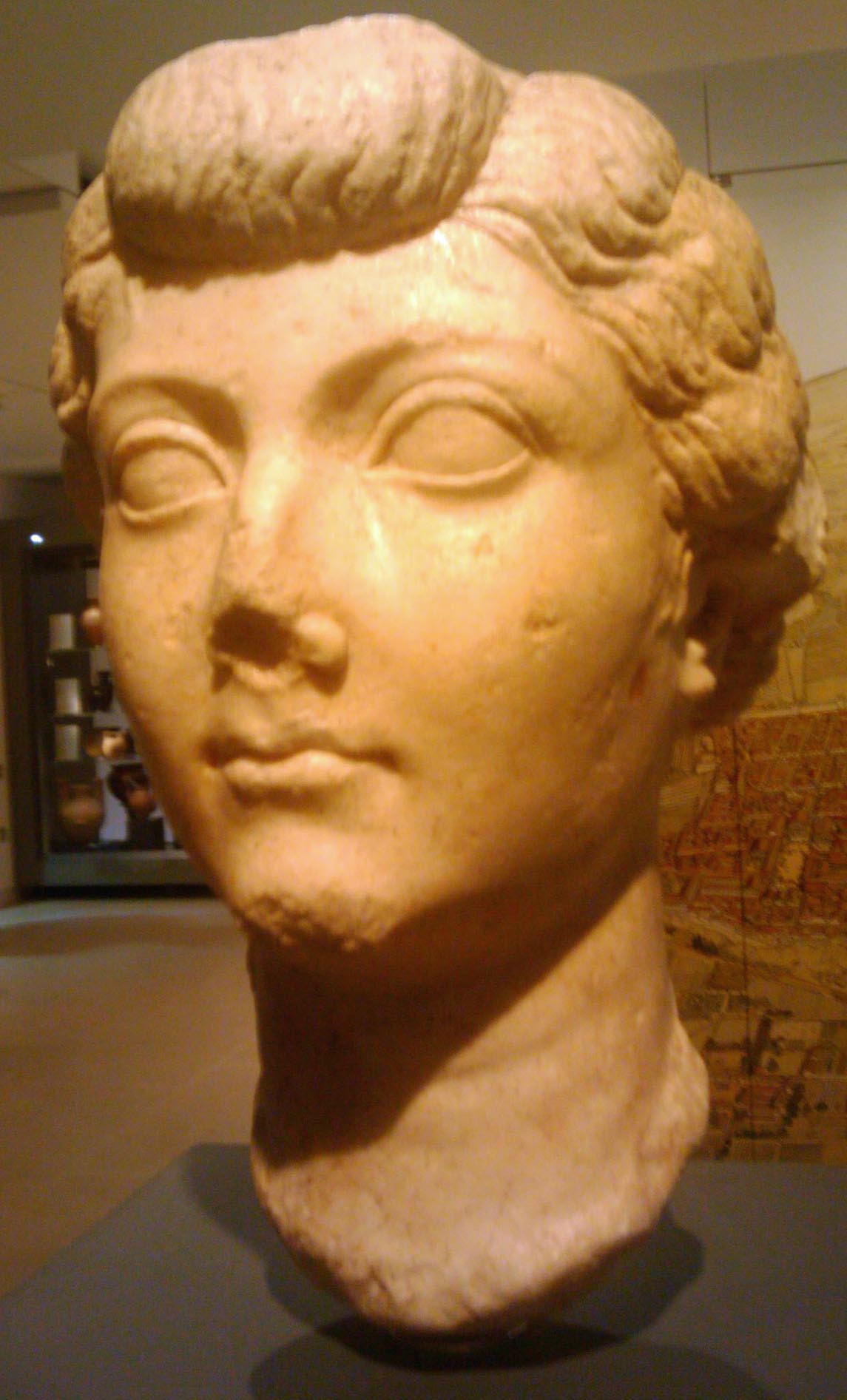
First, the famous one, Livia

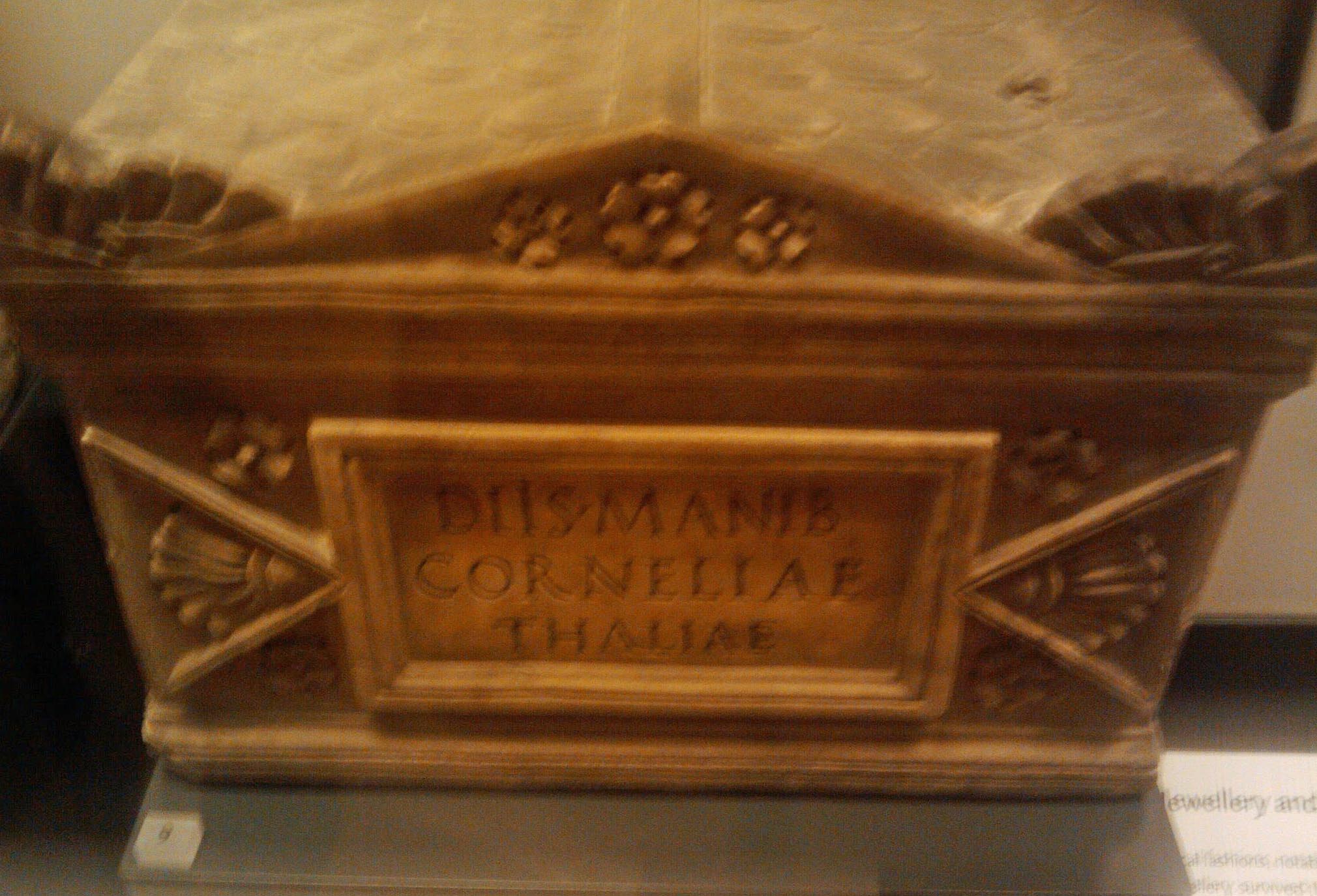
Then the (probably) relatively humble Cornelia Thalia, resident of Rome who died about 50-75AD and whose cremated remains were placed in this small casket, its carving still astonishingly crisp.


read more »

Two books about previous tough times: the themes resound today

A shorter version of this post was published on Blogcritics.

We’re heading into tough times. Everyone knows this, despite the high hopes of those who thought we come to view the “end of history”, the capitalist cycle of boom and bust has gone into yet another deep and dreadful bust. So what’s been like in the past?

I’ve recently been reading two books that helped answer the question. I’ve forgotten now which writer led me to seek out Jane Walsh’s Not Like This, for she’s certainly little-known these days, with only a handful of copies on the work on abebooks, but I’m glad she did, for this is certainly one woman writer whose work and experiences deserve to be better known.

The other work is by the much better-known Robert Roberts, who had the advantage of being male, of a slightly higher class background, and the professional opportunity to thrive in the BBC and universities. The Classic Slum: Salford Life in the First Quarter Centuryy is available in Penguin Classics and I picked it up in the People’s History Museum in Manchester (which ironically is now under threat from the coalition cuts).

Walsh was born in 1905 into the worst part of some of the worst slums of the northern mill town of Oldham, the third of six children. In her early years she moved often but at the age of seven family moved into a quarter condemned houses and they stayed there until 1939 when it was finally cleared away.

Roberts explains how his own situation was little more complicated:

“Our own family was in the slum but not, they felt, of it: we had connections. Father, besides, was a skilled mechanic. During the 60s of the last century his mother, widowed early with four children, had had the foresight to bypass a mission hall near the alley where she lived and send her three good-looking daughters to always Wesleyan chapel on the edge of a middle-class suburb. Intelligent girls, they did their duty by God and mother, all becoming Sunday school teachers in each in turn marrying well above her station, one to a journalist, and other traveller in tobacco and the third a police inspector — an ill-favoured lot the old lady, grumbled, but you can’t have everything… My father, years the junior, stayed working class; it was in fact always harder for a man to break into the higher echelons.”

One of the striking things about both of these accounts is how hierarchical life even at the bottom society then was. Walsh says that the absolute top person in the court where she spent most of her childhood was the Corporation Dustman: “He had wage of 35 shillings a week, and in spite of the fact that he had a family of five we all thought that he did very well, and raise the tone of the place by his steady and respectable job.”
read more »

An excellent historical text on women and consumption

A shorter version of this was first published on Blogcritics

Seeking to explore issues around gender and consumption, I plugged those two terms into abebooks, and one of the first texts that came up was The Sex of Things: Gender and Consumption in Historical Perspective, published in 1996. And it came up trumps.

As with any collection of essays, some of the 13 perspectives, which range from “women buying and selling in Ancien Regime Paris” to “melodrama and consumer nationalism in West Germany”, grabbed me more than others, but what this text overall does deliver is a very important, and much under-considered fact, that consumption patterns are very much historical artefacts, very much products of their time and place not just in the trivial manner of money and products available, but far more about the culture and psychology particular societies have produced – and particularly, given the important role of women in consumption, the place of women within them.

The summary essays introducing the book and each section are also very good at drawing out historical specificities, e.g. Victoria de Grazia in the introduction: “Always in the background looms what was to become the dominant model by the mid-20th century, that advanced by the United States. This model established the predominance of individual acquisitiveness over collective entitlement and defined the measure of the good society as private well-being achieved through consumer spending”. There she also reminds us that tensions around gender are most acute at times of social distress – worth thinking about as we enter critical financial and environmental problems.

And she sets out the traditional conflict over consumption in feminist debate: “Feminist inquiry has identified commercial culture as an especially totalizing and exploitative force, to which women are more vulnerable than men because of their subordinate social, economic and cultural position and because of the patriarchal nature of the organisation and the semiotics of mass consumption… One side assserts that mass consumption victimises women. Fashion codes and beauty standards are denounced as akin to purdah, footbinding or the veil – public sexual impositions on women, which, beyond domesticating women’s drive towards liberation, constrain them phsyically and violate their authentic selves. The other side argues that mass consumption liberates women by freeing them from the constraints of domesticity. Accordingly, they argue that women out shopping or otherwise practicising what has been called ‘style politics’ use the rituals of consumption … to bend the norms ordained by the market and to flout family and other authority.”

But that’s a general overview, and what these essays are concerned with are historical specificities – begining with the fascinating fact that the meaning of the term consumption changed in English between the 17th and 18th centuries, The old word was perjorative, meaning “to waste”, “to devour”, or “to use up”. And in France, there was a dramatic change in the relative value of men’s and women’s wardrobes. Around 1700 noblewomen’s were worth roughly double their mens, and that ratio also applied for artisans and domestic workers. After the middle of the 18th-century, however, the value of female wardrobes increased five to ten times more rapidly than men’s. On the even of the Revolution, a typical male artisan’s wardrobe was worth only one-tenth of his wife’s.

This last is from an essay that focuses particularly on the marchandes de modes (elevated female fashion retailers), and among them Rose Bertin, Marie Antoinette’s dressmaker. It explains the tension around the individual and the role.

“Marchandes de modes like Rose Bertin were… accused of haughtiness and impertinence. When a male aristocrat complained of the cost of his wife’s clothes, Rose Bertin is said to have retorted ‘Oh! is Vernet [a celebrated male painter] paid only according to the cost of his canvas and colours?’ When marchandes de modes claimed to posess genius and imagination as well as the skills of cutting and sewing were aristrocratic female customers to be thought of as their clientrs or patrons? And who, ultimately controlled fashion, aristocrats or shop-girls? Contemporaries feared that, freed from the twin pillars of male reason and aristocratic refinement, females marchandes de modes would not only corrupt the young women who worked in their shops and their female customers, as well as French taste, but ultimately imperil the economy.”

Frustratingly, the essay says nothing of Rose’s fate. (Wikipedia fills that gap – she fled to London for a pile, and eventually died peacefully in 1813.)

The next essay crosses the Channel, and looks at how gendered wardrobes played out in English politics – exploring the statement by John Bowles that English manliness derived from the constitution. It presents the struggle for broader representation of men as a struggle between the aristocracy and the middle classes over which was the more sobre, stately and manly. “In middle-class discourse, as in aristocratic discourse, temperance and patriotism still went in hand in hand, were still threatened by luxuury and enervation.” Thus early feminists faced a twin problem in trying to claim any space in the public realm – it was a site where manliness ruled and was exaggerated, and feminity was defined by its association with luxury (with elite women being the guardians of fashion to which other classes were expected to moderately aspire). Thus “early feminists had to both denaturalise the feminisation of fashion and degender virtue”.
read more »
The pre-Elizabethan not-quite female monarchs of England

A considerably shorter version of this post first appeared on Blogcritics

Pretty well everyone has a personal vision of the Britain’s first Elizabeth – the imperious woman in fine clothes bravely standing up to the Spanish Armada. A smaller percentage with a larger smattering of historical knowledge will know of her older sister, Queen (Bloody) Mary, her Catholic predecessor who’s reign included many miseries, from persecution of Protestants to the loss of Calais.

Helen Castor’s She-Wolves starts with them, and the messy family of their father Henry, but her real interest in earlier, in four women of whom most readers will have only scanty knowledge – yet who are fascinating political figures who in various ways presented models and cautionary tales for the two Tudor monarchs.

The first, the Empress Matilda, will perhaps win a small flicker of modern recognition from her sideways appearance in the Cadfael novels, and Eleanor of Aquitane, queen successively of France and England, is such a towering figure she’ll have registered on most history buff’s radars to some degree, but for most the two other subjects of She-Wolves Isabella, the unfortunate Queen of the inadequate Edward II, and Margaret of Anjou, Queen to the even more hopeless Henry VI, will be terra incognita.

Castor can’t really allow us to know these women as individuals, as living breathing creatures, her sources – scant sometimes even on the basic details of their location for years at a time – don’t allow that. But she does wring from the often frustrating fragments as much detail as seems feasible, and is also clear-eyed and analytical on the basic problem that they faced: there was no model of a female reign on which they could draw. As a consort a queen had a clear and defined role, established scenes to play, from begging for mercy that allowed her king to gracefully pardon errant subjects and regions, to piously providing a model life that might well allow him to play the rake with gay abandon. But to rule, that was unknown, and unthinkable – and yet these women were forced, or felt forced, to find a path through this impossible thicket.
read more »