Author Archives: Natalie Bennett

Kennedy – he’s gone

Seems to me that Charles Kennedy, who has admitted that he is an alcoholic, although he says “dry” for several months, is finished as the leader of the Liberal Democrats, and the longer he hangs on the worse for the party. The current state of play:

More than half of his 62 MPs told a BBC Newsnight survey that Mr Kennedy should go or said his position was untenable.
Twenty-one frontbenchers have signed a statement saying they will resign if he does not quit by Monday. Another four MPs are refusing to serve under him.
Mr Kennedy insists he has overwhelming support from ordinary party members and says he will not abandon his duties.

Pity that there is apparently not one woman even in the long-list to replace him. And all of the people saying he was “brave” to admit it do make one worry slightly about the human race; he “chose” to admit it a few hours before it would be broadcast to the world. That’s not choice; it’s news management.

I don’t particularly care about the Lib Dems as such; although it is a natural effect of the British first-past-the-post, one-member-one-seat electoral system, a party that can’t decide if it is to the left or the right is a bit of a worry. Still, the only thing that is going to improve the electoral system is a hung parliament and a consequence change to some form of proportional representation (even a single transferable vote would help). And that, for the foreseeable future, will probably require the Lib Dems to do reasonably well.
Persian exhibition sold out

In case you were planning to catch the British Museum Persian exhibition before it closes on Sunday, the bad news is that every single ticket for the remaining time has been sold.

The good news is that it is going elsewhere – Milan I believe, although I couldn’t find it on the web.

Friday dog blogging


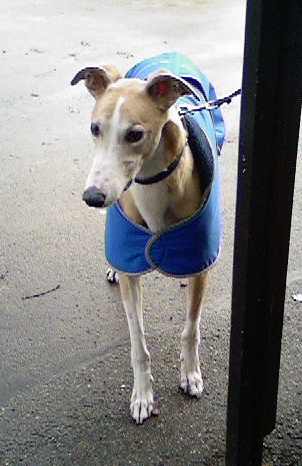
Well, I’ve been fairly restrained on this, but a couple of park pics don’t seem unreasonable.

I’ve cause to thank Henry VIII as we stroll each morning in Regent’s Park, for in 1539, despite already having the hunting grounds of St James’s Park and Nonsuch Palace, he acquired pieces of the manors of Tyburn and Rugmore, from which he made Marylebone Park.

Champ would rather like to do a bit of hunting – of squirrels mainly, and the odd cat, so he hasn’t come off the lead in the park yet. (And probably won’t for some time, for while he understands recall, getting his attention isn’t easy.)

But he is very civilised on the lead – only C-A-T-S cause him to pull. Squirrels just produce a polite little dance of excitement.

This week’s second Thomas More

So, a second Sir Thomas More has arrived on the London stage within three days. Earlier in the week it was Robert Bolt’s 20th-century version, tonight it was the turn of William Shakespeare et al, with an effort dating back to about 1592. Yet these are two men who share little more than a name. In Bolt’s play, Sir Thomas is a natural aristocrat if not an hereditary one; here he is very much a man of the people, consciously maintaining that persona, always ready with a quip and a jest, to the point of buffoonery.

That makes the job of Nigel Cooke in the title role of the RSC’s production of Thomas More a difficult one. There are scenes in the first Act in which he gets to play the statesman, as we watch the London mob – justly angered by the slights and scams of “foreigners” run rampant – being tamed by the power of their sheriff’s wise words. More reminds them of the Tudor peace they have enjoyed for a generation, then conjures up before them the city they have created by their action – a Hobbesian world in which “men like ravenous fishes would feed on one another”. He reminds them that they too might one day be forced to seek refuge in a foreign land, promises the King’s clemency, and so induces them to lay down their arms.

This is the serious More, a mere sheriff of London, but an admirable man. Then, at the end of this scene, as More is collecting up the rioters’ makeshift weapons, the Earl of Shrewsbury (Tim Treloar) arrives with two for him – the first a sword that marks his knighthood, then the mace that makes him Lord Chancellor. Elevation indeed, and we might expect to see more of the statesman emerge. Yet instead, from this point on we see little more than More the jester. Entertaining the great and good of London, which he’s now gone far beyond, he leaps around the stage like a hyperactive flea, eager to please, and happy to join in with the ragtag bunch of players that has turned up at his door, even the “boy” (Peter Bramhill), in fishnets and bustier, seriously past his prime for the role, who clowns in sexual parody. READ MORE

Morning reading

* A reflection on the art of the introduction, which leaves me wondering if I’ve been spoilt for life for fiction by too many years of newspaper writing? I have been accused in academia of writing too journalistically, but then when I think of Orwell, that’s the sort of writing I like in all context. Cut the adjectives!

* Perhaps it has come out badly in translation, but while the Japanese PM, Junichiro Koizumi, has lots of things going for him, urging women to have lots of litters, like dogs doesn’t raise him in my estimation.

* A sensible take on the latest dodgy “abortion causes depression” study. It contains the figure – which I suppose I should have known, but didn’t – that one in seven mothers suffer from post-natal depression.

Trust in the law is not for this season

Classically fine acting by a evenly excellent cast; a sumptuous set and costumes; beautifully balanced staging; the flowing speech and sharp humour of Robert Bolt – the new production of A Man for All Seasons at the Theatre Royal Haymarket has everything needed for a stunning evening’s entertainment. No complaints at all, except a central one about its moral balance – the compass point is on north, but where is it really pointed?

The fault cannot be laid on today’s actors or director, but the world has changed between 1960, when Bolt wrote the play, and 2006 – perhaps it is we who are unbalanced, not the play. Then, for a man to put absolute trust in the law, as Sir Thomas More does in believing that he can save his life by refusing to speak on his reasons for quitting the King’s service and subsequently refusing to sign the Act of Supremacy, might have been sensible enough. That was before Britain started up locking people without charge or trial in Belmarsh prison, or arresting them for reading out the names of the dead in Iraq in an entirely peaceful political protest.

We still want to believe in the rule of law, but we know all too well that rulers and governments determined to find a way to bring down an individual are all too likely to do so, even in Ye Goode Olde Englande. That belief can only be stronger, when the ruler is Daniel Flynn’s powerful, mercurial, dangerously immature Henry VIII. He swings from childlike pleading, to thunderous anger, to hysterical giggles in an attempt to seduce Martin Shaw’s Sir Thomas to do his bidding in getting rid of his now inconvenient first queen. It is clear that Henry truly believes in each political and religious position, just for so long as it suits him; a tantrum-prone three-year-old is on the throne. READ MORE