Category Archives: History

Cycling Cycling Hadrian's Wall History

Cycling Hadrian’s Wall, Day 2

20-plus miles, Ravenglass to Whitehaven

The day begins with a detour, to Muncaster church, mostly to check out a “Viking Cross”, which doesn’t look as good as the drawings in the guidebook, although it is curiously arranged – lined up in the churchyard apparently with all of the 18th and 19th century graves – presumably not its original position. In the church is a broken bell – rather roughly cast, with lots of air bubbles, but then it was made about 1470 to commemorate Henry VI’s stay at Muncaster after the battle of Hexeth.

On the wall are many plaques to the local lords of the manor, here since the 14th century, eg. “In memory of Will Pnyngton Arm: whose first wife was Joan Wharton, daughter of Thomas Lord Wharton, the second wife was Dame Bridgett Askew, daughter of Sir John Hudlleston by whom he had three sons… William Pnyngton and all his tried horsemen were called upon in service at the borders 1543.”

The local ladies cleaning the church – doing community duty but curiously uninformed about its history – were cheeringly impressed by what I was doing – well I may have played it up a little… “It’s only about 160 miles,” (airy wave of the hand), “no big deal…”

Then it was back to the official start of the ride, the Roman bath-house for the obligatory mugging at the camera start of the ride picture…
read more »

Cycling Hadrian's Wall History

Cycling Hadrian’s Wall, Day 1

Day one, the adventure begins.. well if you count five hours-plus on a train as an adventure. Virgin West Coast line to Carlisle, 20 minutes late; just made the milk-run train to Ravenglas connection, which was handy since there wasn’t another for two hours.

Was navigating that route with a map of the kingdom of Cumbria in about 1100AD, so not entirely clear where I was, and the Sellafield nuclear plant, near the ancient church town of St Bees came as a bit of a surprise. The guesthouse “Muncaster Country” is very pleasant – lovely gardens on to the fields – even boasting wireless internet access, although for five pounds a night I think I’ll pass.
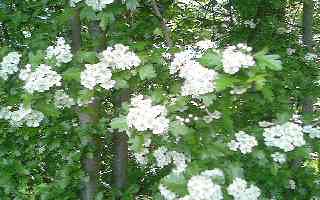
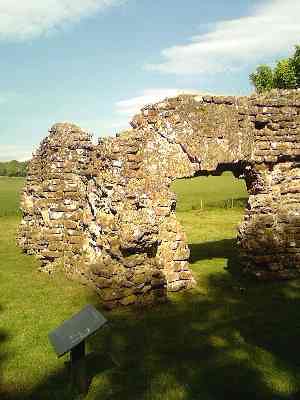
mayTook a stroll down to town along the ancient footpath – a profusion of mauve rhododendrons, the May bush in full flower, a couple of sound-asleep mallards beside a very shallow stream. Further down the stream’s course it forms a pond, which was the reservoir for the Roman bathhouse, parts of which still stand to more than 12 feet, at the base of the hill. It was just outside the corner of the Roman fort, the outline of which can be seen. (Most of it hasn’t been excavated.)
ravenglassbaths

Ravenglass (a Roman port because the confluence of three rivers, the Irt, Esk and Mite, produced a sheltered harbour) it now might be best described as a hamlet – two pubs, a couple of guest houses, and a very fat Jack Russell called Penny, which I could still be patting. The sea shore is a mix of sand and gravel – inter-tidal life consisting of sea lettuce, brown seaweed further down, and very small barnacles, the odd periwinkle, and obviously some sort of pipi out there somewhere, to judge from the broken shells.

The day’s reading, courtesy of the London Library, was Land of the Cumbrians: A Study in British Provincial Origins AD 400-1120, by Charles Phythian-Adams, difficult but interesting. I’m not quite sure why some authors of monographs have to try so hard to make them readable only by experts. Major characters and perhaps even kingdoms (well princedoms) keep being introduced without any explanation; I’d reckon there’s half a dozen people in the world with whom this is envisaging a conversation, yet it wouldn’t add much length or be too much trouble for the experts to skip over.

Anyway, I’ve made sense of most of it. Basically, it is a highly revisionist history, tackling a number of claims that seem to date back a century or in some cases many centuries, but based on flimsy or no evidence. Th basic thesis is that the Norman fiefdoms and royal demense did not necessarily follow earlier cultural, religious or political boundaries. Instead the author argues – chiefly from place-name evidence, with a bit of archaeology thrown in, “Carlisle … until the days of Earl Siward … was probably more or less continously the seat of kings or sub-kings”, but their control only occasionally ran north of the Solway. The coastal region – so open to the Irish Sea, also had pretty much its own, very multicultural history. (p. 165)
read more »

Feminism Women's history

Smile, you are making history

OK, I confess to being quietly chuffed when the British Library wrote to me asking for permission to archive Philobiblon for posterity as part of the women’s issues collection. Do follow that second link and check out a great range of websites – it is nice to see efforts are being made to collect this material, although I rather pity future researchers having to deal with the bulk of it.

Early modern history Women's history

Don’t work for royalty

Margaret Gwynnethe, the wife of Stephen Vaughan and mother of the Protestant author and John Knox-champion Anne Lock, was a silkwoman at the court of Henry VIII, serving particularly his two most “Protestant” queens, Anne Boleyn and Catherine Parr.

After her death on 16 September 1544, her husband wrote to a court official asking for the £360 that Catherine Parr owed for her materials and labour. In January he still hadn’t been paid and wrote again. (There doesn’t seem to be a final conclusion to this; perhaps he was never paid?)

In 1544 £360 was an enormous sum – for comparison Lady Grace Mildmay was a few years later maintaining a family on £130 a year.

From Felch, S.M. The Collected Works of Anne Vaughan Lock, Arizona Center for Medieval and Renaissance Studies, 1999.)

(Quite a number of Margaret’s letters are in the State Papers of Henry VIII.)

History Politics

Thailand – Getting Worse

Thailand is supposedly one of the great economic and social success stories of 20th-century development. But as poor old East Timor (the region’s newest state) struggles to restore stability, the state of the Thai nation isn’t looking so great either.

After months of foot-dragging, officials have ordered a government forensics team to exhume 300 unmarked graves in Pattani province. Human-rights activists suspect that these unknown corpses might include suspected Muslim insurgents who were abducted and executed by government death squads. Nearly 1,300 people have died in the 30 months since violence re-erupted in Thailand’s impoverished deep south, home to some three million Muslims.

The area was not much more than a century ago an independent sultanate, Pattani, something that the Thai state has since tried to suppress. I didn’t adequately realise at the time, but when the Bangkok Post ran, about a decade ago, a feature on the archaeology of the area and the sultanate, it was displaying some political courage.

The Thai “national story” runs that very nearly everyone is “Thai” – some 95 per cent – a figure that makes no sense at all as you get to know the country, for not only are there the Muslims in the South, but a great many Khmer and Laos in Isaan (the northeast) and what are known as the “hilltribes” in the North.

In the “nationbuilding” of the past 150 years all of those realities have been suppressed. But I fear that has stored up future trouble. Were you to be a young journalist looking to set up a base as a stringer, to be in the right place at the right time, Thailand might not, sadly, be a bad choice.

Early modern history

The change from medieval to early modern manners

From “Orders for Household Servantes; first devised by John Haryngton, in the Yeare 1566, and reneued by John Haryngton, Sonne of the saide John, in the Yeare 1592”

VI. Item, That no man make water within either of the courts, uppon paine of, every tyme it shal be proved, 1d.

VII. Item, That no man teach any of the children any unhonest speeche, or baudie word, or othe, on paine of 4d.

VIII. Item, That no man waite at the table without a trencher in his hand, except it be uppon some good cause, on paine of 1d.

You can just imagine the servingmen grumbling about all these new-fangled rules and controls…

From: Hughey, R. John Harington of Stepney: Tudor Gentleman. His Life and Works, Ohio State University Press, Columbus, 1971.